Croissant Recipes at Home
Highlighted under: Dessert Corner
I have always been enamored by the delicate, flaky layers of a perfect croissant. Making croissants at home is a rewarding experience that allows you to enjoy fresh pastries right out of the oven. The aroma that fills my kitchen while they bake is simply irresistible. I've experimented with various techniques and found that understanding the lamination process is key to achieving the right texture. With a little practice and patience, you can create buttery, golden croissants that rival any bakery.
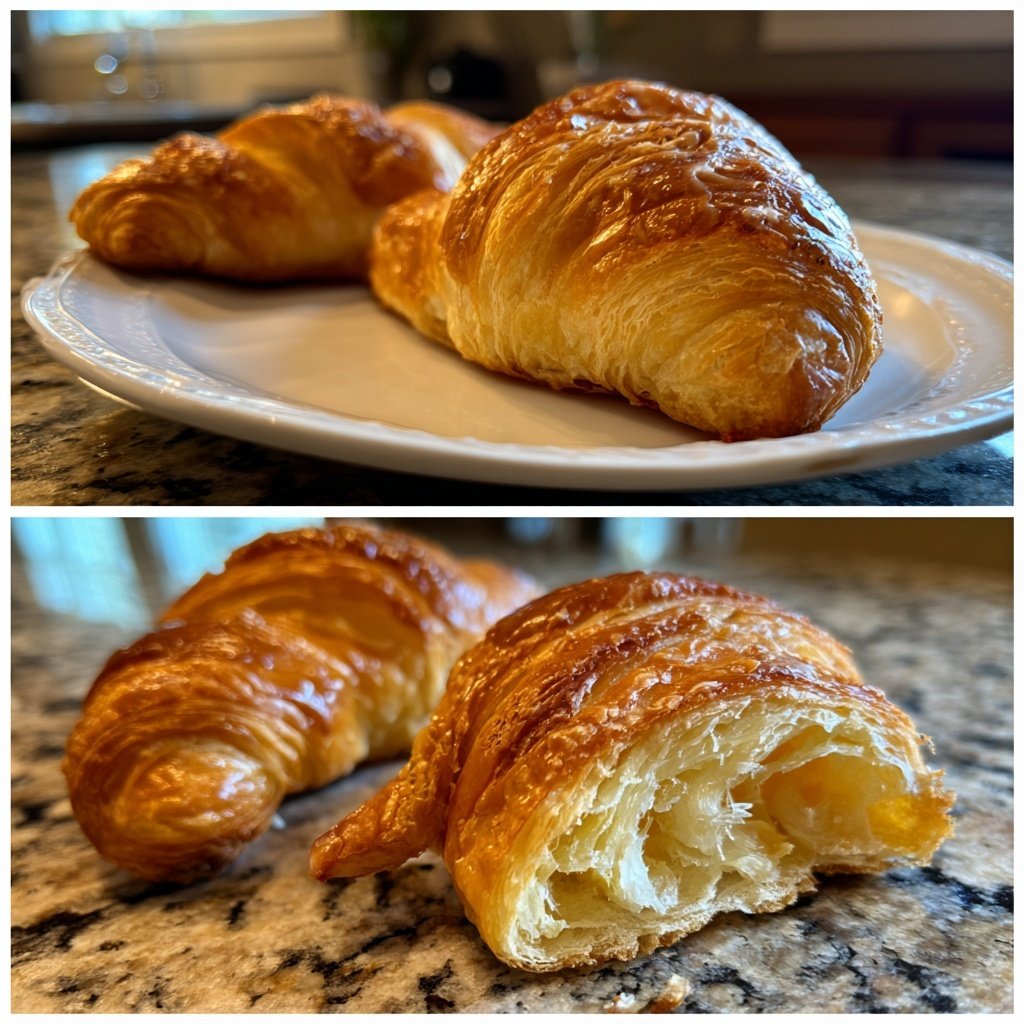
I remember the first time I tried to make croissants at home; it felt both daunting and exciting. After several attempts, I learned that the temperature of my butter and dough was crucial. Keeping everything chilled helped achieve those perfect flaky layers. By rolling and folding the dough carefully, I could create dozens of airy layers. The process may take some time, but the first bite of a freshly baked croissant is worth every minute spent.
Each time I make croissants, I feel like a true baker. I love experimenting with different fillings, from classic almond paste to rich chocolate. These variations add a personal touch and elevate the croissant experience. My tip is to be patient during the rising phases and never rush the lamination. You'll end up with croissants that are golden, flaky, and utterly delicious!
Why You'll Love This Recipe
- Flaky layers that melt in your mouth
- The satisfying aroma of freshly baked bread
- Versatile options for sweet and savory fillings
Mastering the Lamination Process
The lamination process is crucial for achieving the signature flaky layers of a croissant. It involves rolling and folding the dough to create layers of butter and dough. For each fold, aim for a consistent thickness of about 1/4 inch. Visual cues, such as the dough becoming glossy and smooth, indicate you're on the right track. I recommend using a ruler for precision when rolling out the dough to maintain uniformity across all layers, which translates to even baking and that perfect flake.
When incorporating the butter, make sure it’s cold but pliable. If it's too soft, it will ooze out during rolling, impacting the final texture. If you find your butter too hard, let it sit at room temperature for just a few minutes until it can be easily patted. Remember, the goal is to keep the butter in a solid state to create distinct layers of flaky goodness after baking.
Perfecting the Shape
Shaping the croissants can be an art, but practice makes perfect. When cutting the triangles, ensure each piece is uniform – about 12 cm wide at the base is a good size for even shaping. After rolling, it’s essential not to stretch the dough too much; gently roll from the wide end to maintain the triangle shape. A tightly rolled croissant helps achieve a lovely rise during baking and prevents them from unfurling.
For an added touch, you can customize the filling before rolling; think almond paste, chocolate, or cheese. Just ensure whatever you use is not too moist, as this can lead to soggy croissants. Don’t overload the filling; about a tablespoon should suffice to keep the layers intact without excess leaking out.
Ingredients
Gather the following ingredients for a delicious batch of homemade croissants:
For the Dough
- 500g all-purpose flour
- 10g salt
- 50g sugar
- 25g active dry yeast
- 300ml warm milk
- 50g unsalted butter, melted
For the Butter Layer
- 250g unsalted butter, cold and firm
For the Egg Wash
- 1 egg
- 1 tbsp milk
Once you have all your ingredients ready, you're all set to start the croissant-making process!
Instructions
Follow these steps carefully to create your perfect croissants:
Prepare the Dough
In a large bowl, combine flour, salt, sugar, and yeast. Slowly add warm milk and melted butter. Mix until combined, then knead for about 10 minutes until the dough is smooth. Cover and let rise for 1 hour.
Incorporate the Butter
While the dough is rising, pound the cold butter into a flat rectangle between two sheets of parchment paper. Chill in the fridge until the dough has completed its first rise.
Roll and Fold
On a floured surface, roll the dough into a rectangle and place the cold butter in the center. Fold the dough over the butter, enclosing it completely. Roll out and fold the dough into thirds. Repeat this process two more times, chilling between folds.
Cut and Shape
Roll the dough into a large rectangle again and cut into triangles. Starting from the wide end, roll each triangle tightly into a croissant shape. Place on a lined baking sheet.
Final Rise and Bake
Cover the croissants and let them rise for 30 minutes. Preheat the oven to 200°C (400°F). Brush the croissants with the egg wash and bake for 15-20 minutes until golden brown.
Once they're baked to perfection, enjoy your homemade croissants warm!
Pro Tips
- Keep the butter and dough cold throughout the process to achieve the best flaky texture. Also, don't rush the rising time
- it's crucial for the croissants to develop their structure.
Storing and Reheating
Once baked, croissants are best enjoyed fresh but can be stored at room temperature in an airtight container for up to two days. If you want to keep them longer, freeze them after cooling completely. Place them in a freezer bag, squeezing out as much air as possible, and they will last for up to a month.
To reheat, simply pop them in a preheated oven at 180°C (350°F) for about 5 to 10 minutes. This will help rejuvenate the flaky texture while warming the inside. Avoid using the microwave, as this will make them chewy rather than crisp.
Troubleshooting Common Issues
If your croissants are dense instead of flaky, it could be due to overworking the dough during kneading or folding. Make sure to handle the dough gently; the goal is to create layers, not to develop gluten too much. Allowing sufficient resting time between folds is also crucial, so don’t rush this step.
Another common problem is croissants that don’t rise well. This may happen if your yeast is not activated properly or if the dough was left in a cold environment. Ensure your warm milk is about 110°F (43°C) when mixing and give your dough a warm place to rise, ideally around 75°F (24°C) or higher.
Questions About Recipes
→ Can I freeze croissants after baking?
Yes, you can freeze baked croissants. Just make sure to wrap them tightly in plastic wrap or aluminum foil.
→ How can I tell when my croissants are done baking?
Croissants should be golden brown and sound hollow when tapped on the bottom. This indicates they are fully baked.
→ Can I use whole wheat flour instead of all-purpose flour?
You can, but keep in mind that it may alter the texture slightly, leading to fewer flaky layers.
→ What are some good fillings for croissants?
Popular fillings include almond paste, chocolate, ham and cheese, or even fruit preserves.
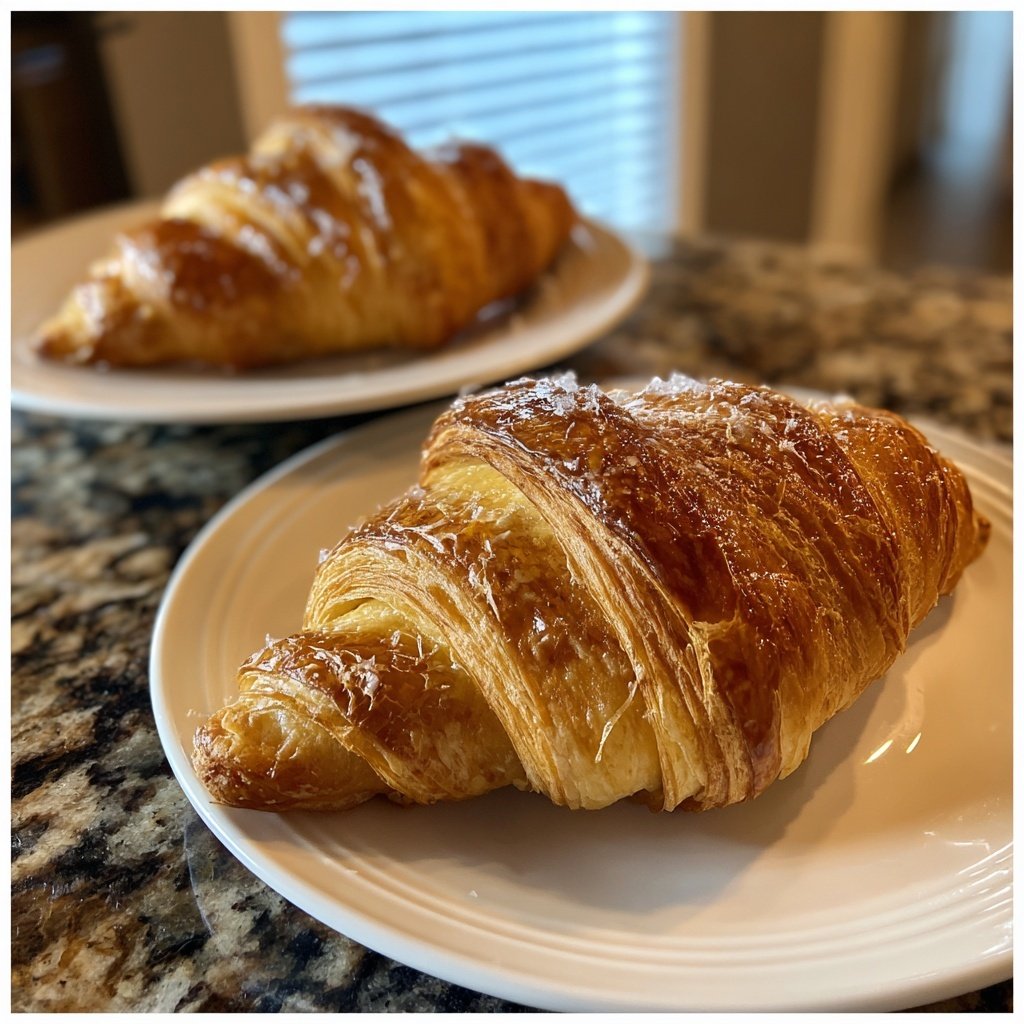
Croissant Recipes at Home
Created by: Harper Collins
Recipe Type: Dessert Corner
Skill Level: Intermediate
Final Quantity: 12 croissants
What You'll Need
For the Dough
- 500g all-purpose flour
- 10g salt
- 50g sugar
- 25g active dry yeast
- 300ml warm milk
- 50g unsalted butter, melted
For the Butter Layer
- 250g unsalted butter, cold and firm
For the Egg Wash
- 1 egg
- 1 tbsp milk
How-To Steps
In a large bowl, combine flour, salt, sugar, and yeast. Slowly add warm milk and melted butter. Mix until combined, then knead for about 10 minutes until the dough is smooth. Cover and let rise for 1 hour.
While the dough is rising, pound the cold butter into a flat rectangle between two sheets of parchment paper. Chill in the fridge until the dough has completed its first rise.
On a floured surface, roll the dough into a rectangle and place the cold butter in the center. Fold the dough over the butter, enclosing it completely. Roll out and fold the dough into thirds. Repeat this process two more times, chilling between folds.
Roll the dough into a large rectangle again and cut into triangles. Starting from the wide end, roll each triangle tightly into a croissant shape. Place on a lined baking sheet.
Cover the croissants and let them rise for 30 minutes. Preheat the oven to 200°C (400°F). Brush the croissants with the egg wash and bake for 15-20 minutes until golden brown.
Extra Tips
- Keep the butter and dough cold throughout the process to achieve the best flaky texture. Also, don't rush the rising time
- it's crucial for the croissants to develop their structure.
Nutritional Breakdown (Per Serving)
- Calories: 300 kcal
- Total Fat: 20g
- Saturated Fat: 12g
- Cholesterol: 70mg
- Sodium: 180mg
- Total Carbohydrates: 25g
- Dietary Fiber: 1g
- Sugars: 3g
- Protein: 6g